Monitoring Desk
ISLAMABAD: The ceasefire agreement between Pakistan and India, reached after days of heightened military confrontation earlier this month, remains in effect without an expiry date, senior officials from both sides confirmed on Sunday, countering media speculation of a looming deadline.
The clarification comes after Deputy Prime Minister and Foreign Minister Ishaq Dar told the Senate that the directors general of military operations (DGMOs) had extended the ceasefire until May 18 during a May 14 conversation, prompting widespread reports of an impending lapse.
However, officials from both countries made it clear that the ceasefire—brokered on May 10 through intense U.S. diplomacy led by Vice President JD Vance and Secretary of State Marco Rubio, with assistance from Saudi Arabia—has no set expiration and remains firmly in place.
“There is no expiry date to the break in hostilities, as reaffirmed in the DGMOs interaction of May 12,” said an Indian official. No new DGMO talks were scheduled for May 18, contradicting rumors of a Sunday deadline.
While the Pakistan Army has not issued a formal statement, a diplomat speaking on condition of anonymity said the ceasefire was open-ended and aimed at building long-term stability. “The discussions of the DGMOs were aimed at making the ceasefire sustainable,” the diplomat said.
The May 10 ceasefire was reached after the most serious escalation between the nuclear-armed neighbors in over two decades. Cross-border shelling, drone incursions, and air force strikes brought the region to the brink of war. Initial violations were reported shortly after the truce, but since then, both militaries have reportedly engaged in constructive dialogue.
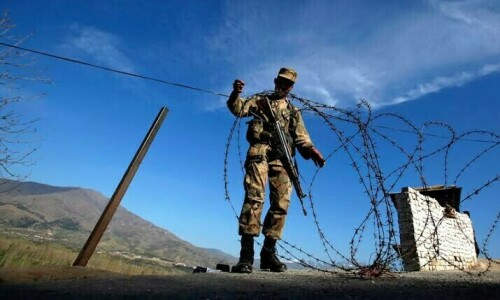
In a May 12 phone call between Pakistan’s Maj Gen Kashif Abdullah and India’s Lt Gen Rajiv Ghai, the two sides reaffirmed their commitment to de-escalation and agreed to a phased reduction of forward troop deployments along the border. This would restore the pre-crisis posture, with Pakistan Rangers and India’s Border Security Force manning the international boundary.
Pakistan Foreign Office spokesperson Shafqat Ali Khan confirmed that DGMOs have remained in regular contact since May 10 and are working on a structured mechanism for sustained de-escalation.
However, while Islamabad sees the ceasefire as a possible gateway to broader peace talks—including on Kashmir and water rights—India has taken a more cautious approach. Prime Minister Narendra Modi called the truce a “temporary pause,” and Defence Minister Rajnath Singh stated that “Operation Sindoor is not over yet … Pakistan is on probation.”
In remarks to Arab News, Pakistan military spokesperson Lt Gen Ahmed Sharif Chaudhry confirmed the ceasefire was holding and emphasized that Pakistan’s response to any violations would be targeted and restrained.
“If any violation occurs, our response is always there … but it is only directed at those posts and those positions from where the violations of the ceasefire happen. We never target civilians. We never target any civil infrastructure,” he said.
Reiterating Pakistan’s long-held position on Kashmir, the military spokesman warned that the unresolved dispute remains a dangerous flashpoint. He also issued a stern warning over India’s recent threat to unilaterally cut off Pakistan’s share of Indus River waters—after suspending the 1960 Indus Waters Treaty following a militant attack in Indian-administered Kashmir, which Pakistan denies any involvement in.
“Their policy on Kashmir — of oppression and trying to internalise it — is not working,” Chaudhry said. “Till the time Indians don’t sit and talk about Kashmir … the conflict potential is there.”
He warned that any attempt to stop Pakistan’s water supply would trigger long-term consequences. “Nobody dares stop water from Pakistan,” he said. “The world will see the consequences of such actions for years and decades to come.”
The Indus Waters Treaty, a landmark agreement brokered by the World Bank, has weathered multiple wars between the two countries and is considered one of the most successful water-sharing arrangements in the world. Its unraveling could add a perilous new dimension to an already volatile regional dynamic.