
Monitoring Desk
In a sweeping move to document Pakistan’s informal economy, the federal government is expected to introduce a dual-pricing mechanism in the upcoming budget for 2025-26 — charging a premium on cash transactions while incentivising digital payments across multiple sectors, including petroleum.
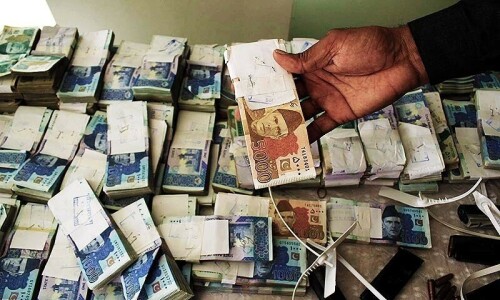
As part of its broader campaign to declare a “war on cash”, the policy — if approved — would mark a pivotal shift in the government’s strategy to promote financial transparency, widen the tax base, and reduce the estimated Rs7 trillion in annual tax evasion.
According to highly placed sources, the Finance Bill 2025-26 will propose differential tax rates on cash versus digital transactions. Fuel purchases are likely to be among the first sectors where the policy will take effect, with consumers paying Rs2–3 per litre more if buying petrol or diesel in cash.
“This is a regulated environment and implementable at the outset,” an official involved in the discussions told Dawn, adding that the initiative is also intended to digitally track petroleum supplies and curb smuggling — a practice that causes annual losses of Rs300–500 billion.
The new policy is a part of a broader government roadmap for end-to-end digitisation, as championed by Finance Minister Muhammad Aurangzeb, who has consistently advocated for structural reforms through technology. At several recent forums, the minister declared the need to “declare war on cash” if Pakistan is to expand its tax base and aspire to become part of the G20 economies.
In his recent pre-budget interactions, the finance minister also hinted at a symbolic but meaningful tax relief of 1 to 1.5 percentage points for the salaried class — under instructions from the prime minister to signal a gradual shift in tax burden away from the documented segments of the economy.
The proposed dual-pricing model will not be limited to petroleum. Importers, wholesalers, and manufacturers may be required to levy an extra 2% General Sales Tax (GST) on transactions settled in cash, over and above the standard 18% GST applied to digital payments.
“If wholesalers, distributors, and retailers want to continue with cash-based sales, they will have to pay more tax — and so will their customers. But that’s their commercial decision,” a senior FBR official said.
Every business — large or small — will be legally obligated to offer both digital and cash payment options, with digital payments incurring lower costs. Solutions will include not just point-of-sale (POS) terminals but also simple, cost-effective methods like QR codes and mobile apps. This is in line with global trends, where countries like India, Indonesia, and Bangladesh have reported notable success through similar digitisation models.
The government has held multiple rounds of consultations involving the Federal Board of Revenue (FBR), the Ministry of Petroleum, banking institutions, and digital consultancy firms to develop feasible solutions. However, officials concede that past efforts to document cash-based sectors — including event management, marriage halls, jewellery businesses, and private practices — have fallen short of expectations.
To address this, the upcoming Finance Bill will reportedly introduce legal provisions to enforce dual pricing and mandate digital options, aiming to pull small-scale and informal transactions into the tax net using a carrot-and-stick approach.
FBR Chairman Rashid Mehmood Langrial declined to comment in detail ahead of the budget, stating only: “We must move towards a cashless economy.”
The move is expected to significantly support ongoing legislative efforts to digitally trace petroleum products from import and refining to final sale, further tightening loopholes in supply chains and boosting government revenue.
The finance minister has estimated that more than Rs9.3 trillion is circulating in the informal cash economy. He has argued that meaningful progress on tax documentation, audit trails, and digitisation is impossible without addressing this fundamental issue.
“Our economy has a potential size of over $700 billion,” he recently stated. “But we remain stuck at $410 billion because we haven’t documented our transactions. This must change.”
The 2025-26 budget, to be unveiled on June 10, is expected to be a landmark statement of intent in this direction.