
Monitoring Desk:
ISLAMABAD: After an unsuccessful attempt to privatize Pakistan International Airlines (PIA), the government has officially moved the national carrier’s divestment to the second phase of its privatization agenda, prioritizing the sale of power distribution companies (Discos) in the first phase despite concerns over readiness.
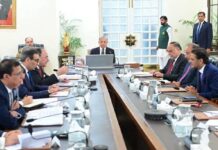
This decision was conveyed to a delegation of World Bank executive directors currently visiting Pakistan to review the country’s economic reforms, including its privatization program. The discussions are part of the follow-up to the Country Framework Programme (CPF), which was finalized last month with an indicative assistance package of around $20 billion. Both sides have agreed to hold joint implementation workshops to ensure the smooth execution of the CPF.
Minister for Economic Affairs Ahad Khan Cheema, in a meeting with the delegation, reaffirmed the government’s commitment to privatizing state-owned enterprises (SOEs) in a phased manner. “In the first phase, the government is focusing on the privatization of power distribution companies, while PIA and other SOEs will be privatized in the second phase,” he stated.
The decision follows the government’s failed attempt to divest PIA, which forced authorities to scrap the process and rethink their strategy. Since then, efforts have been underway to prepare for another attempt at selling off the national airline.
World Bank Concerns Over Discos’ Privatization
During the meeting, the World Bank delegation, consisting of five executive directors and four alternate executive directors, raised concerns about the planned privatization of Discos. They questioned whether substantial circular debt and structural challenges in the power sector could hinder the success of the privatization process. Additionally, they sought clarity on the government’s broader approach to handling SOEs, many of which have been draining public resources.
Minister Cheema assured the delegation that the government aims to privatize up to 50 SOEs over the next three to four years. He emphasized that approximately one-third of the SOEs are considered strategic assets, while the rest will be gradually privatized to improve efficiency and reduce financial losses.
Addressing Circular Debt and Power Sector Challenges
Cheema acknowledged the severe financial strain caused by high electricity tariffs and technical losses, which have made energy unaffordable for many consumers. He noted that the rising adoption of renewable energy solutions was reducing dependence on conventional power sources. “The circular debt is slowly declining, and we are making efforts to achieve full cost recovery in the power sector,” he added.
He also outlined key challenges, including inefficient distribution, line losses, and the high cost of electricity. The minister reiterated that Pakistan’s energy strategy now focuses on expanding renewable energy and improving efficiency in power distribution to address these longstanding issues.
Strengthening Ties with the World Bank
Cheema expressed appreciation for the World Bank’s continued engagement, noting that this was the third delegation visit in a short span. He said it reflected the institution’s confidence in the government’s ongoing economic reforms and its commitment to supporting Pakistan’s development.
The World Bank representatives explained that their visit aimed to gain a deeper understanding of Pakistan’s economic, political, and governance landscape while identifying areas for future development support under the newly launched CPF for 2026-2035.
Digitalization and Social Reforms
Highlighting Pakistan’s digital transformation efforts, the minister informed the delegation that the government had completed a comprehensive review of digitalization models. “Pakistan is now advancing towards end-to-end digitalization of its institutions,” he stated.
Responding to inquiries about youth employment and women’s empowerment, Cheema highlighted the government’s progress in these areas. He pointed to the success of technical training programs and empowerment initiatives for women, emphasizing that adequate budgetary allocations had been made to ensure their expansion.
With the World Bank monitoring Pakistan’s economic reforms closely, the government’s ability to successfully execute its privatization plans—particularly in the power sector—will be a key test of its economic management.