Monitoring Desk
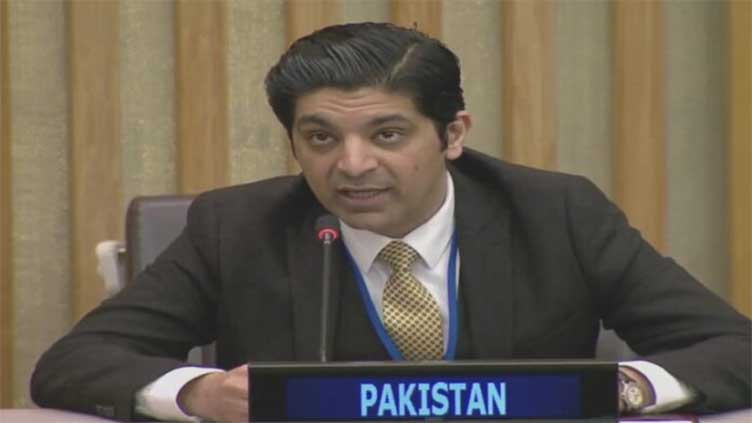
Tensions between Pakistan and India flared once again at the United Nations as Pakistani and Indian delegates exchanged sharp rebukes during the launch event of the UN Office of Counter-Terrorism’s “Victims of Terrorism Associations Network” (VoTAN) on Monday.
Jawad Ajmal, Counsellor at Pakistan’s Mission to the UN, urged the international community and the UN Security Council to hold India accountable for what he described as “state terrorism and criminal oppression” against the people of Indian Illegally Occupied Jammu and Kashmir (IIOJ&K). Rejecting Indian allegations of spreading “baseless propaganda,” Ajmal asserted that no amount of denial could conceal the ongoing violations in the region.
“The international community must hold the Indian perpetrators of this state terrorism, and crimes against humanity in IIOJ&K, to account,” he stated while exercising his right of reply.
Ajmal welcomed the launch of VoTAN, reaffirming Pakistan’s strong condemnation of terrorism in all forms and manifestations. Referring to the recent attack in Pahalgam, he expressed condolences over the loss of tourists’ lives, joining UN Security Council members in condemning the incident.
Reacting strongly, India’s Deputy Permanent Representative to the UN, Ambassador Yojna Patel, accused Pakistan of misusing the platform to “indulge in propaganda and make baseless allegations,” further accusing Pakistan of being complicit in terrorism itself.
Ajmal responded forcefully, highlighting the suffering of Kashmiris under what he termed the “worst form of state terrorism” by India, backed by an occupation force of 900,000 troops. He reiterated Pakistan’s call for the implementation of UN Security Council resolutions mandating a free and fair plebiscite in Kashmir.
The Pakistani delegate also pointed to the broader impact of terrorism on Pakistan, citing over 80,000 lives lost and thousands injured over the past two decades. Referring to the recent Balochistan Liberation Army (BLA) terrorist attack on the Jaffer Express near Sibi, Ajmal alleged external sponsorship, hinting at India’s involvement.
Ajmal stressed the need for a comprehensive global approach to counterterrorism that addresses root causes, distinguishes between terrorism and legitimate struggles for self-determination, and tackles state-sponsored terrorism. He also called for a consensual definition of terrorism and greater efforts to combat disinformation and hate speech.
In a related development, the United Nations Security Council (UNSC) condemned the Pahalgam attack and, notably, reaffirmed Jammu and Kashmir’s status as a disputed territory, reinforcing Pakistan’s longstanding position on the conflict.