
Monitoring Desk
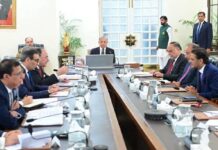
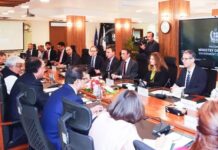
Prime Minister Shehbaz Sharif on Tuesday lauded his government’s performance over the past year, highlighting its success in steering Pakistan out of financial crises and securing critical international support to avert default. Addressing a cabinet meeting, he credited his team’s efforts in achieving economic stability and reaffirmed his ambition to transform Pakistan into a $1 trillion economy by 2035.
Economic Recovery and Key Challenges
The prime minister acknowledged the government’s strenuous efforts to meet International Monetary Fund (IMF) conditions, revealing that securing $5 billion in financial assistance was only possible through diplomatic efforts led by himself and Chief of Army Staff Gen Asim Munir.
He emphasized the importance of expediting Rs400 billion in pending tax cases and addressing the Rs850 billion losses incurred by state-owned enterprises. Additionally, he reiterated the government’s commitment to resolving the circular debt crisis in the power sector.
To provide relief during Ramazan, the government launched a Rs20 billion welfare package benefiting four million families. Under a newly introduced digital wallet system, each family will receive Rs5,000, ensuring transparency and preventing financial mismanagement.
Diplomatic Breakthroughs and Global Stance
PM Shehbaz strongly condemned the closure of the Gaza humanitarian corridor and denounced the killing of over 50,000 Palestinians by Israeli forces. He also called upon the international community to raise its voice for the people of Kashmir and Palestine.
Foreign Minister Ishaq Dar announced that Pakistan had successfully ended its diplomatic isolation, securing a seat on the UN Security Council for 2025-26. He also highlighted Pakistan’s hosting of the Shanghai Cooperation Organization (SCO) summit after a 27-year gap and emphasized the country’s vulnerability to climate change.
Economic Growth and Energy Sector Reforms
Finance Minister Muhammad Aurangzeb provided an overview of Pakistan’s economic revival, reporting a 71% return in the Pakistan Stock Exchange and the highest current account surplus in two decades. He outlined significant reforms, including the rightsizing of 43 ministries, pension restructuring, the introduction of an agriculture tax, and a faceless tax assessment system that has boosted revenue by 60%.
Power Minister Awais Leghari highlighted reforms in the energy sector, stating that Rs151 billion had been saved through a reduction in industrial cross-subsidy. He also announced the solarization of 4,000 tube wells in Balochistan, expected to cut losses by Rs100 million.
Digital Advancements and Development Plans
Minister of State for IT Shaza Fatima Khawaja reported major growth in the digital sector, with 15 million new broadband subscribers and the telecom industry contributing Rs341 billion to the national economy.
Planning Minister Ahsan Iqbal reaffirmed the government’s commitment to long-term development under the ‘Uraan Pakistan’ roadmap, focusing on five key economic corridors.

Additional reports were presented on anti-smuggling measures, the Green Pakistan Initiative, and the Special Investment Facilitation Council’s (SIFC) role in enhancing the agriculture and livestock sectors.
With its economic and governance reforms, the government remains focused on sustainable growth and financial stability while addressing pressing national and global challenges.