
Monitoring Desk
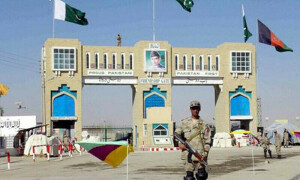
After nearly a month-long closure due to a border dispute, trade and medical emergencies resumed at the Torkham border on Wednesday following ten days of intense negotiations led by tribal elders from both Pakistan and Afghanistan.
The reopening was marked by a brief ceremony at the zero point, where delegates from both sides met for half an hour before allowing stranded vehicles to cross over. Ambulances carrying critically ill Afghan patients were also seen at the crossing, as Pakistani traffic police worked to regulate the heavy flow of vehicles eager to move before sunset.
Diplomatic and Tribal Efforts Bear Fruit
According to Pakistani sources, Afghan representatives first stepped onto Pakistani soil before Pakistani officials reciprocated by crossing into Afghanistan as a goodwill gesture.
During the ceremony, Younas Momand of the Afghan Chamber of Commerce and Industries and Shah Khalid Shinwari, Tehsil Chairman of Landi Kotal, emphasized the need for keeping the border permanently open and resolving future disputes through dialogue. They also urged both sides to honor their written and verbal commitments while discouraging negative propaganda.

Following their speeches, members of the jirga (tribal delegation) offered collective prayers, exchanged hugs, and shared bouquets as a symbol of restored cooperation. Trade activities resumed immediately, with a vehicle carrying coal from Afghanistan entering Pakistan, while another loaded with cement crossed into Afghanistan.
Border Talks and Agreement
The reopening followed a morning meeting between border security officials, where both sides agreed to halt new constructions near the zero point until a permanent resolution is reached. Initially, vehicular traffic and emergency medical cases were given priority, with regular pedestrian movement expected to resume in the coming days.
Backdoor diplomatic efforts between officials in Peshawar and Jalalabad played a crucial role in reaching an agreement, alongside two rounds of jirga negotiations. The first round took place at Torkham on March 7, while the second session on March 17 at Afghanistan’s customs office (Gumruk) led to a final breakthrough.
Economic Impact of the Closure
The Torkham crossing, one of the busiest trade routes between Pakistan and Afghanistan, was abruptly shut down on February 20 following tensions over the construction of an Afghan security check post near the zero point. A three-day armed skirmish erupted between border forces on March 3 before diplomatic intervention halted hostilities.
Pakistani traders estimate that the closure resulted in revenue losses of $40.5 million, with Pakistan losing Rs545 million daily due to the ban on Afghan imports. Before the closure, the bilateral trade volume via Torkham had surged from 350 to nearly 800 trucks per day.
With the border now operational, stakeholders on both sides hope that trade and diplomatic engagements will prevent such disruptions in the future.