
Monitoring Desk
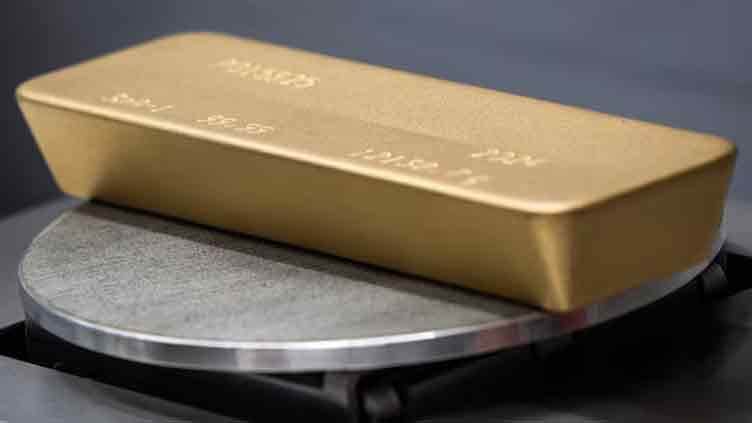
Gold prices dipped on Wednesday as easing tensions in U.S.-China trade relations curbed demand for the safe-haven metal, while investors turned their focus toward upcoming inflation data for insights into the Federal Reserve’s next moves.
Spot gold declined by 0.7% to $3,226.11 per ounce as of 0430 GMT, while U.S. gold futures slipped 0.6% to $3,229.50.
“Positive developments in U.S. trade policy are diminishing the appeal of gold in the short term,” said Kyle Rodda, financial market analyst at Capital.com. He added that further progress in trade negotiations could push gold prices lower, with the $3,200 level emerging as a key support threshold.
The market sentiment improved following a White House executive order indicating a reduction in the “de minimus” tariff on low-value shipments from China to 30%. This move marks another step toward de-escalating the prolonged trade war between the world’s two largest economies.
Earlier this week, U.S. President Donald Trump stated that he does not anticipate tariffs on Chinese goods returning to 145% following the current 90-day suspension. Trump also expressed optimism that a lasting agreement between Washington and Beijing is within reach.
Meanwhile, the U.S. Department of Labor reported that the consumer price index rose by 0.2% in April, slightly below economists’ expectations of a 0.3% increase. In March, CPI had declined by 0.1%.
Traders are now awaiting Thursday’s Producer Price Index (PPI) data for further clarity on inflation trends, which could influence the Federal Reserve’s policy direction. Markets currently anticipate 53 basis points of rate cuts by year-end, beginning in September.
Gold, which serves as a hedge against inflation and benefits from lower interest rates, may gain traction if inflation softens and rate-cut expectations solidify.
Elsewhere in the precious metals market, spot silver fell 0.8% to $32.61 per ounce, platinum held steady at $988.65, and palladium dropped 0.9% to $948.60.