The government has announced a steep increase of Rs55 per litre in the prices of petrol and high-speed diesel, citing rising international oil prices driven by escalating tensions in the Middle East.
With the latest adjustment, the price of petrol has been set at Rs321.17 per litre while high-speed diesel will now cost Rs335.86 per litre. The revised prices took effect immediately from midnight.
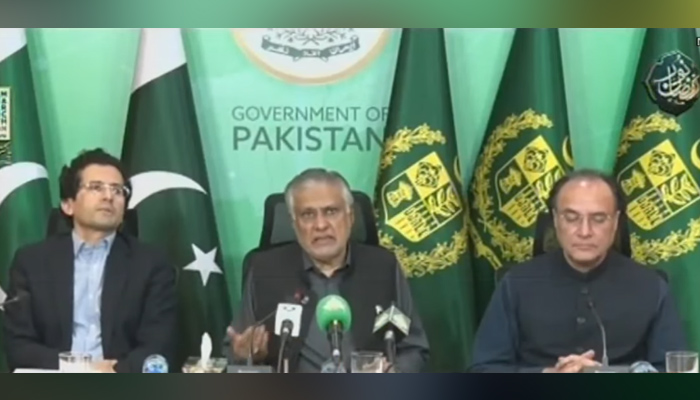
The announcement was made during a joint press conference by Deputy Prime Minister Ishaq Dar, Finance Minister Muhammad Aurangzeb and Petroleum Minister Ali Pervaiz Malik.
Explaining the decision, Ishaq Dar said the region was witnessing an extraordinary situation due to escalating tensions and conflict in the Middle East, which has sharply pushed global petroleum prices upward.
He said the government had been closely monitoring the rapidly changing international market conditions and reviewing the situation daily. According to him, Prime Minister Shehbaz Sharif personally chaired a meeting earlier in the day to assess the evolving situation and determine an appropriate response.
Dar said the government had attempted to strike a balance while deciding the magnitude of the price increase, adding that Pakistan was also in contact with foreign counterparts in efforts aimed at reducing regional tensions.
“Global petroleum prices are rising sharply due to the ongoing conflict in the region,” he said, noting that the government had to take a difficult decision under extraordinary circumstances.
The government has also revised the petroleum development levy structure. The levy on petrol has been increased from Rs84.40 per litre to Rs105 per litre, while the levy on high-speed diesel has been reduced from Rs76.21 per litre to Rs55 per litre.
Petroleum Minister Ali Pervaiz Malik said the country was facing unusual regional circumstances and that developments in neighboring regions had begun affecting the wider energy market.
He said the government had already increased petroleum product reserves to ensure supply stability and avoid disruptions in the domestic market.
Malik acknowledged that the decision to increase prices was difficult but unavoidable given the rapidly rising international oil prices. He added that the government would move quickly to reduce prices once global conditions improve.
The minister also announced that the government would now review petroleum product prices on a weekly basis to respond more effectively to fluctuations in global oil markets.
Consumer and Economic Impact
The significant increase in fuel prices is expected to raise transportation costs and could trigger a new wave of inflation, particularly affecting essential commodities transported across the country.
High-speed diesel is widely used in heavy transport, agriculture machinery and public transport, meaning the increase could lead to higher freight charges and passenger fares.
Analysts warn that the fuel price hike may also put additional pressure on already strained household budgets as transportation and logistics costs pass through to food prices and other consumer goods.