Monitoring Desk
ISLAMABAD: Pakistan on Monday called on the international community to urgently step in and help de-escalate rising tensions in South Asia, warning that India’s aggressive posture, recent treaty violations, and baseless accusations following the Pahalgam attack threaten regional peace and stability.
The appeal came in the wake of India’s unilateral suspension of the Indus Waters Treaty, coupled with inflammatory rhetoric from New Delhi after a deadly attack in Indian-held Kashmir that killed 26 people. Pakistan’s leadership rejected India’s blame, framing it as a deliberate attempt to deflect attention from the unresolved Kashmir dispute, which Islamabad maintains is the root cause of instability in the region.
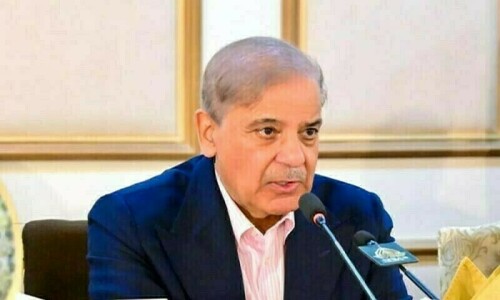
In high-level diplomatic engagements on Monday, Prime Minister Shehbaz Sharif urged foreign partners to support an “independent, transparent and credible” international investigation into the Pahalgam incident. He extended invitations to countries including the UK to participate in the inquiry.
During talks with visiting Iranian Foreign Minister Seyed Abbas Araghchi, PM Shehbaz welcomed Iran’s mediation efforts and reiterated Pakistan’s commitment to regional peace. Araghchi, expected to visit New Delhi on Thursday, conveyed Iran’s willingness to help defuse tensions and strengthen ties with Islamabad.
PM Shehbaz also accused India of attempting to politicize international financial institutions in a bid to damage Pakistan’s economy and described India’s recent moves on water sharing as a “red line.” He condemned India’s actions concerning the Indus Waters Treaty, calling them “unacceptable” and “reckless.”
‘Pakistan Will Defend Itself’
Deputy Prime Minister and Foreign Minister Ishaq Dar, speaking at a seminar in Islamabad, stressed that Pakistan seeks peace but will not tolerate aggression.
“Pakistan will not hesitate to exercise its inherent right to self-defence under Article 51 of the UN Charter if provoked,” he said, warning that India’s recent steps appear to be part of a calculated attempt to incite hysteria and justify hostility.
Dar also cautioned that India’s suspension of the Indus Waters Treaty marked a dangerous precedent with far-reaching consequences. He urged the global community to act before the situation spirals out of control.
“Any tolerance for adventurism would only embolden further instability,” he added. “Pakistan remains a responsible actor committed to peace and de-escalation.”
Military Stands Firm
The civilian leadership’s call for restraint was echoed by the military, with Chief of Army Staff Gen Asim Munir warning that Pakistan’s sovereignty and territorial integrity were non-negotiable.
“If violated, we will respond with full force to preserve our national prestige and protect our people,” Gen Munir said during remarks at the Balochistan National Security Workshop.
The Iranian foreign minister also met with Gen Munir at GHQ, where both sides discussed regional security challenges, with special focus on the Pak-Iran border coordination.
International Concern Grows
Meanwhile, Russia joined Iran in expressing concern over the escalating situation. Kremlin spokesperson Dmitry Peskov urged both sides to take steps to reduce tensions and confirmed that Moscow is following the developments closely.
President Vladimir Putin, during a phone call with Indian Prime Minister Narendra Modi, reaffirmed Moscow’s close ties with both Delhi and Islamabad, reiterating that Russia’s relations with the two countries are not mutually exclusive.
“We value our strategic partnership with India as well as our important ties with Pakistan,” said Peskov. Moscow has also offered to mediate the crisis, with Foreign Minister Sergei Lavrov holding calls with both sides last week.
Pakistan has consistently maintained that durable peace in South Asia hinges on resolving the Kashmir dispute in accordance with UN Security Council resolutions and the aspirations of the Kashmiri people.