Monitoring Desk
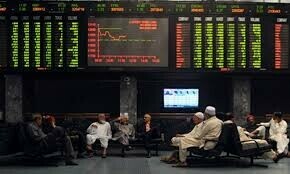
ISLAMABAD: The Pakistan Stock Exchange (PSX) rebounded on Tuesday, gaining over 1,700 points in early trade, a day after a massive sell-off triggered by global market volatility led to one of the steepest declines in recent history.
At 11:02am, the benchmark KSE-100 index was up 1,734.69 points, or 1.51 per cent, to reach 116,644.17, recovering from Monday’s close of 114,909.48.
Market analysts attributed the rebound to a recovery in global and Asian markets, improved investor sentiment, and encouraging developments on the trade diplomacy front.
Yousuf M. Farooq, Director Research at Chase Securities, said the market bounce followed regional recoveries and reports suggesting that Pakistan had initiated dialogue on tariffs, including contact between the foreign minister and U.S. Senator Marco Rubio.
He said, “The stock market has rebounded from yesterday as Asian markets recover… Most participants believe Pakistan should remain relatively insulated from tariff impacts, as exports form a small share of GDP. In fact, lower commodity prices could boost domestic consumption.”
Farooq noted that Monday’s sharp decline, which wiped out an estimated Rs474 billion in market capitalization, was within normal correction patterns. “Companies this morning continue to do what they’re doing,” he added.
Awais Ashraf, Director Research at AKD Securities, echoed the optimism, saying investors saw Monday’s dip as a buying opportunity amid broader global market recovery.
“In our view, yesterday’s market decline was unwarranted, especially considering the potential upside for Pakistan amid the ongoing global trade conflict,” he said. He added that relatively lower tariff rates could position Pakistan’s exports favorably, while softer commodity prices would aid the country’s external account.
Mohammed Sohail, CEO of Topline Securities, said the PSX’s recovery aligned with global trends. “Pakistani stocks have rebounded in line with the recovery in US and global markets,” he said.
Monday saw the KSE-100 plunge by 3,882 points in a single session, with trading halted for an hour after the index nosedived 6,000 points. The slide continued after trade resumed, with another 2,000-point drop by the closing bell, as panic over a potential global recession gripped investors following China’s retaliatory tariffs against the United States.
Meanwhile, a partial rebound in Asian markets on Tuesday offered some relief. Japan’s Nikkei led the recovery with a 5.6% surge, far outpacing other regional markets. The MSCI Asia-Pacific Index gained 1.7%, while Hong Kong’s Hang Seng rose 1.6% after Monday’s crash—the steepest since the 1997 Asian financial crisis.
Analysts remain cautious, however, as market volatility persists. The VIX index—Wall Street’s “fear gauge”—spiked above 60 overnight for only the second time since the pandemic, signaling continued investor nervousness.
As trade headlines continue to shift, investors await clarity on future US tariff moves. President Donald Trump denied reports of a 90-day tariff pause for countries other than China, doubling down instead with threats of further levies unless Beijing backs down. China, in turn, dismissed the pressure, calling the US stance “blackmail.”
Despite the uncertainty, Pakistan’s equity market showed signs of resilience, bolstered by expectations of limited exposure to tariff-related risks and a potential window of opportunity for local exporters.