
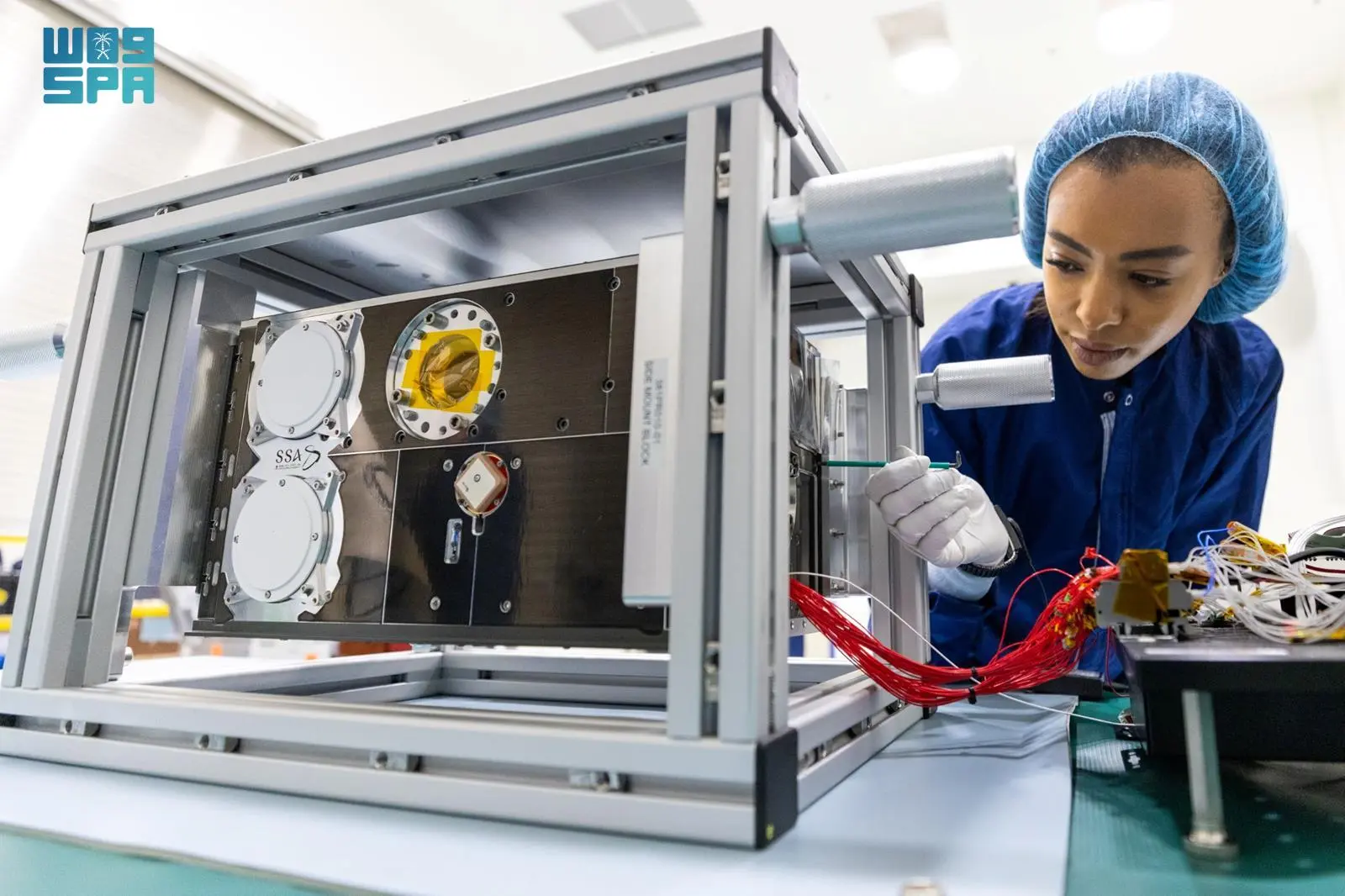
Saudi Arabia has marked a significant entry into global space exploration by launching its “Shams” satellite as part of the Artemis II mission, becoming the first Arab country to participate in the Artemis program NASA.
The Saudi Space Agency confirmed that the satellite was successfully deployed and initial communication has been established following its launch aboard the Space Launch System, a key component of the mission.
Led by the National Aeronautics and Space Administration (NASA) in collaboration with international partners, Artemis II represents a major step toward returning humans to the Moon’s vicinity after more than five decades. The mission includes a crewed lunar flyby using the Orion spacecraft, setting the stage for future deep space exploration.
The “Shams” satellite will operate in a highly elliptical orbit extending from about 500 kilometres to 70,000 kilometres above Earth, enabling comprehensive observation of solar and radiation activity. This will enhance research in space weather and contribute to improving the resilience of critical sectors such as communication, aviation, and navigation systems.
Developed within Saudi Arabia, the satellite highlights the Kingdom’s growing technological capabilities and reflects the impact of the National Industrial Development and Logistics Program, aligned with the broader goals of Saudi Vision 2030.
The mission will focus on four key scientific areas: space radiation, solar X-rays, Earth’s magnetic field, and high-energy solar particles, generating data to support global scientific research and operational readiness.
Acting CEO of the Saudi Space Agency Mohammed bin Saud Al-Tamimi said the achievement reflects the Kingdom’s commitment to advancing scientific innovation, supported by the leadership of King Salman bin Abdulaziz Al Saud and Crown Prince Mohammed bin Salman.
Separately, CEO of the National Industrial Development and Logistics Program Jameel bin Ahmed Al-Ghamdi noted that the development of “Shams” locally demonstrates progress in building competitive industrial and technological capabilities.
The Saudi Space Agency said the launch underscores the Kingdom’s ambition to strengthen international partnerships and play a growing role in shaping the future of space exploration.