Pakistan’s fragile economic recovery is once again under pressure as the World Bank has revised down its GDP growth projection to 2.6% for FY2025–26, warning that widespread flooding and food supply disruptions are undermining key sectors, especially agriculture.
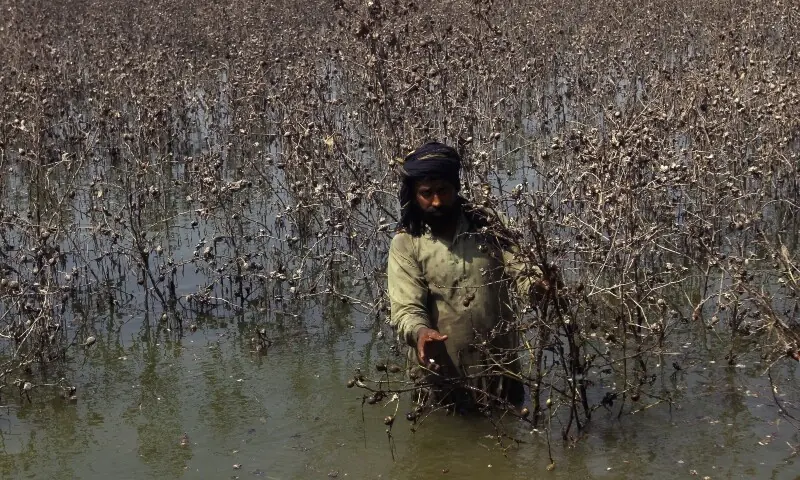
In its latest Regional Economic Outlook for the Middle East, North Africa, Afghanistan and Pakistan (MENAAP), the Bank said flood devastation in Punjab and Sindh has caused a 10% drop in agricultural output, affecting rice, wheat, and cotton production — key contributors to Pakistan’s export and rural economy.
The report cautioned that the damage will push inflation back to 7.2%, reversing last year’s temporary relief when prices had eased to single digits. It also projected that poverty reduction has stalled as repeated economic and climate shocks continue to erode household income and food security.
“Floods have not only damaged crops and infrastructure but have also weakened rural purchasing power, limiting domestic demand and overall growth,” the report noted.
Trade and Reform Outlook
The Bank said Pakistan’s five-year tariff reform plan (2025–2030) — which aims to halve import duties — could help boost exports and competitiveness once stability returns. However, it forecast a 1.5% fall in exports this fiscal year due to global slowdown and internal disruptions.
Economic growth is expected to rebound modestly to 3.4% in FY2026–27, driven by improved agricultural output, easing inflation, and stronger private sector confidence.
Gender Inclusion and Demographic Shifts
Highlighting long-term challenges, the World Bank urged Pakistan and other regional economies to address gender inequality in labour participation, calling it a “missed opportunity for growth.” Only one in five women participates in the workforce across the MENAAP region — the lowest rate worldwide.
“Increasing female labour participation could raise GDP per capita by up to 30% in Pakistan,” said Roberta Gatti, the World Bank’s Chief Economist for the region.
The report also noted that Pakistan’s fertility rate of 3.5 — among the highest in the region — is expected to decline below replacement levels within a generation, marking a major demographic transition.
Regional Economic Snapshot
The World Bank projected regional growth to rise to 2.8% in 2025 and 3.3% in 2026, led by Gulf economies benefiting from diversified non-oil growth. However, it warned that conflicts, trade barriers, and climate-related risks could slow progress.
Despite reform momentum, the Bank concluded that Pakistan’s economic stability remains vulnerable to extreme weather, governance challenges, and uneven recovery across sectors